-1.png?w=520&h=124)
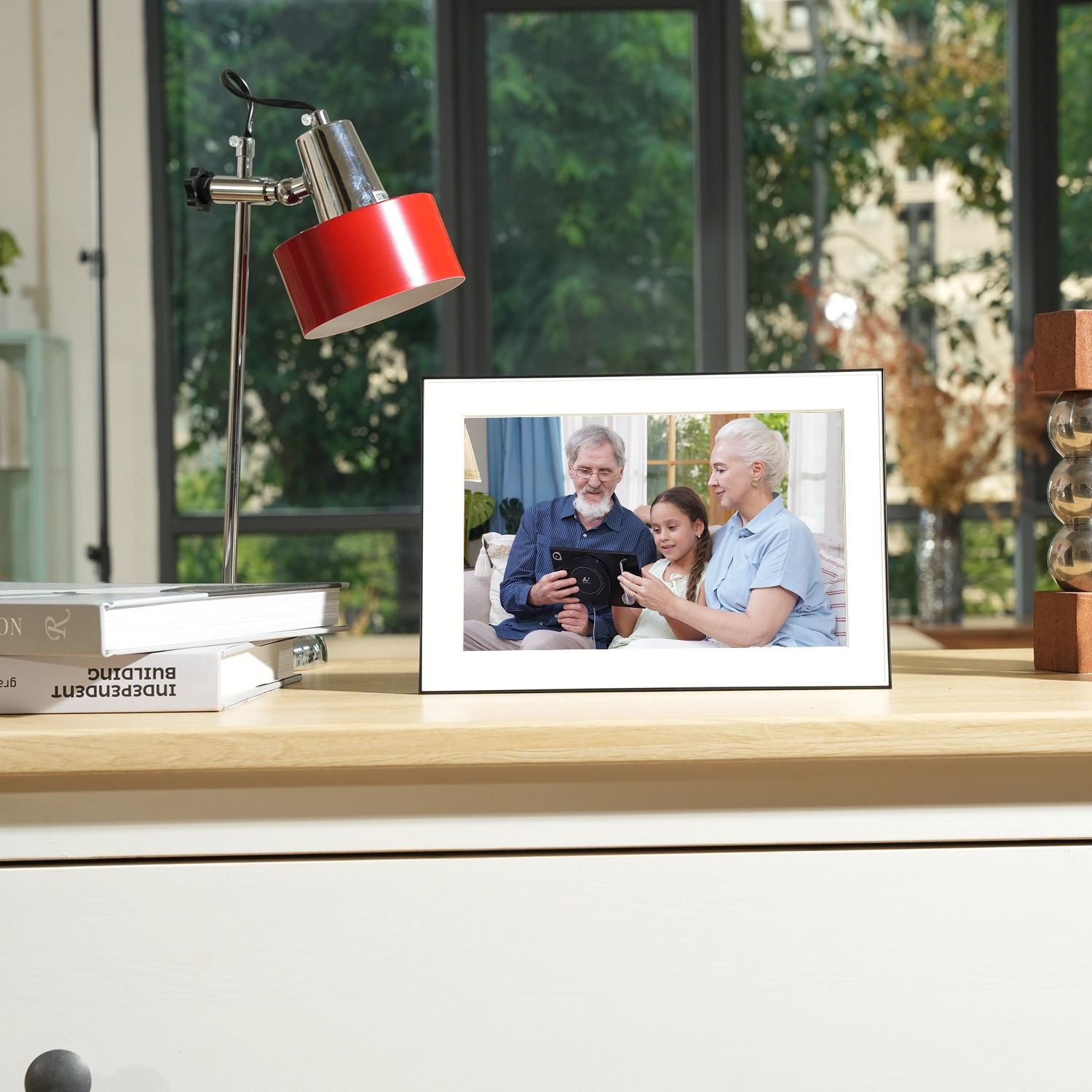
A Frame for the Heart of Our Home
There's a painting hanging on the wall in our living room—one we bought when we got married, and I've never had the heart to replace it. Last year, when we renovated, my wife suggested turning that wall into a smart frame that would keep playing our family photos.
I took this seriously. A frame in the living room is something we—and every visitor—would see every day. Its display had to be truly good, not like some cheap electronic gadget.
The Search for Quality
I went to a few stores to look at models and compared specs online, too. Some frames made photos look dull, dark, and washed out—like a glowing bulletin board stuck in the middle of the room. Others had cheap-looking borders that felt plasticky and completely clashed with our home's style.
I realized quickly that not all digital frames are created equal. Here's what I learned matters most:
Resolution Makes or Breaks the Experience
Many budget frames use 800x600 or 1024x768 resolution. That might sound fine on paper, but when you're displaying photos on a 10-inch screen in your living room, those pixels become visible. Photos lose their sharpness, colors blend together, and fine details disappear.
The screen on the Homture frame won me over at first sight. The colors were vibrant but not overblown, blacks were deep, whites were bright, and every detail in the photos stood out clearly. I even looked up its resolution afterward—Full HD (1920 × 1200 pixels), better than other frames in the same price range.
Color Accuracy Matters
Some frames I tested had screens that made photos look either too warm (everything had an orange tint) or too cool (everything looked bluish). Others had poor color saturation—photos looked washed out, like they'd been left in the sun too long.
A good digital frame should display your photos the way you remember them. When I looked at our wedding photos on the Homture frame, the colors matched what I saw on my phone and computer. That consistency matters.
Viewing Angles and Brightness
Here's something I didn't expect to matter: viewing angles. Some cheaper frames look great when you're standing directly in front of them, but the colors shift or the screen darkens when you view from the side.
In a living room, people aren't always standing directly in front of your frame. They're sitting on the couch, walking past, or viewing from across the room. The Homture frame maintains consistent color and brightness from any angle.
The Design Details That Matter
Beyond the screen itself, the frame's physical design plays a huge role in whether it looks like a premium piece of decor or a cheap gadget:
- Bezel design: Thin, elegant bezels make the frame look modern. Thick plastic borders scream "cheap electronics."
- Build quality: The frame should feel solid, not hollow or flimsy.
- Finish options: A matte finish often looks more sophisticated than glossy plastic.
- Thickness: Slimmer frames (under 1 inch) look more like artwork than electronics.
How It Looks in Our Home
Now it sits prominently in our living room. Whenever friends come over, at first glance they all think it's a painting that moves.
That's exactly what I wanted—a frame that doesn't announce itself as a piece of technology, but rather blends seamlessly into our home as a beautiful way to display our memories.
"The best digital photo frame is one that makes people ask, 'Wait, is that a screen?' rather than 'Why is there a tablet on your wall?'"
What to Look for When Shopping
If you're in the market for a digital photo frame and want one that truly looks like art, here's my checklist:
Screen Specifications
- Resolution: Look for Full HD (1920 × 1200 or 1920 × 1080) minimum
- Screen size: 10 inches is the sweet spot for most rooms
- IPS panel: Ensures good viewing angles and color accuracy
- Brightness: At least 250 nits for well-lit rooms
Design Elements
- Thin bezels (under 0.5 inches)
- Premium materials (wood, metal, or high-quality plastic)
- Slim profile (under 1 inch thick)
- Multiple orientation options (landscape and portrait)
Smart Features
- Auto-brightness adjustment for different times of day
- Motion sensor to save energy when no one's around
- Easy photo management via smartphone app
- AI features like photo enhancement or animation
The Bottom Line
A digital photo frame is an investment in how you display your memories. If you're going to put it in a prominent place in your home—your living room, entryway, or bedroom—it needs to look the part.
Don't settle for a frame that makes your beautiful photos look dull or cheap. The difference between a budget frame and a quality one isn't just in the specs—it's in how it makes you feel every time you walk past it.
For me, finding the Homture AI Photo Frame meant finding a frame that honored our memories with the display quality they deserved. Now, instead of a painting that never changes, we have a living gallery that brings new joy every day.
Experience Full HD Quality
See your memories the way they deserve to be seen—in stunning Full HD resolution with vibrant colors and crystal-clear detail.